Groundwater Is Disappearing, and Most Water Policy Ignores It
The world's most important water source sits below the debate entirely, invisible, unregulated, and running low.
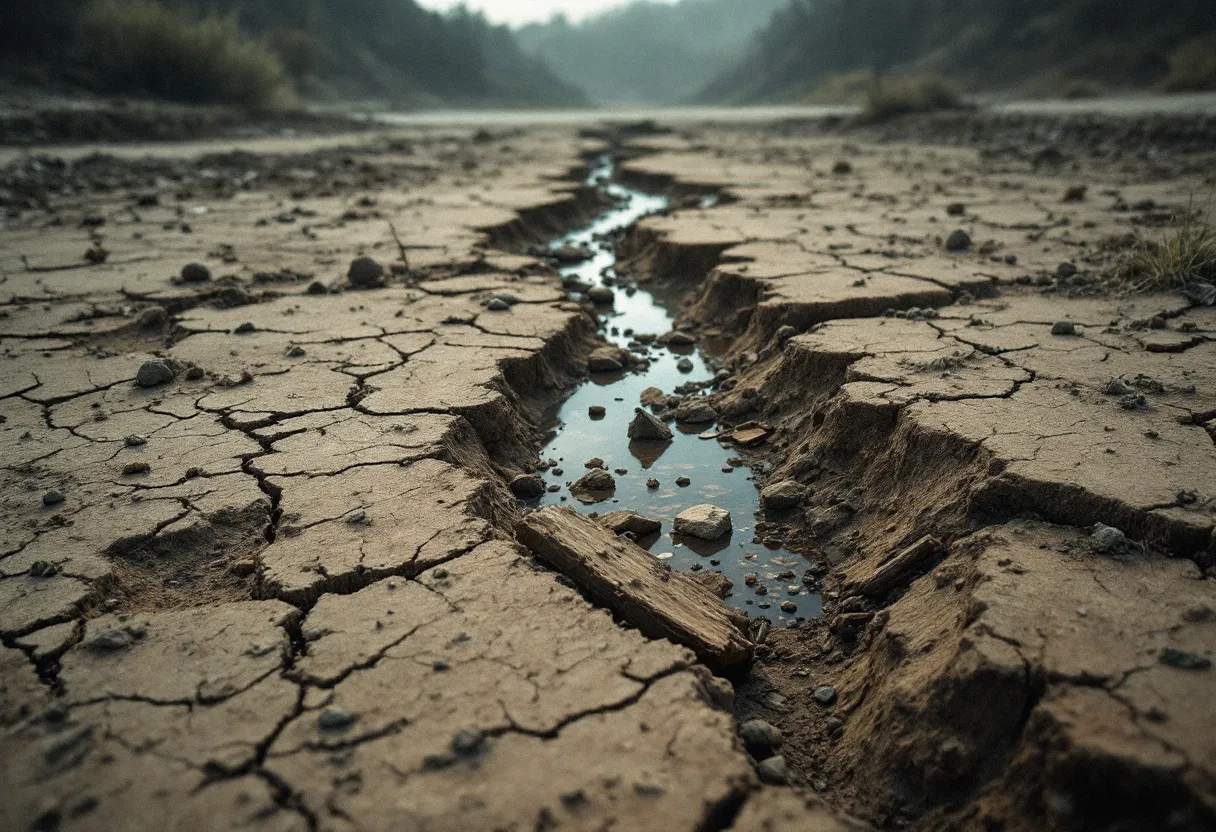
When water scarcity enters political debate, the focus is almost invariably on what is visible: rivers, reservoirs, rainfall. Groundwater, the vast reserves held in aquifers beneath the surface, supplying an estimated forty percent of global irrigation water and a significant share of drinking water, receives a fraction of the policy attention proportionate to its importance.
The disproportion is partly perceptual. You cannot photograph an aquifer running dry the way you can photograph a cracked reservoir bed. The decline is invisible until, suddenly, it is not: until wells run deeper and then fail, until land subsides in cities built atop depleted aquifers, until the agriculture that depended on fossil water for generations discovers there is no longer enough.
The Measurement Gap
One reason groundwater is poorly governed is that it is poorly measured. Surface water has been monitored by agencies with long institutional histories. Groundwater monitoring networks are patchier, less standardised, and in many regions effectively non-existent. Decisions about extraction rates are frequently made with data that is years or decades out of date.
Satellite gravity measurements, a relatively recent tool, have provided a global picture that is genuinely alarming in several major agricultural regions. But satellite data can show that a large area's groundwater mass is declining without easily disaggregating the cause or the precise remaining reserve. The precision that policy requires is often absent.
Who Controls What Is Below
Groundwater governance is a legal thicket. In many jurisdictions, landowners retain broad rights to extract water from beneath their own property, a principle inherited from legal traditions developed long before the scale of modern agricultural pumping was imaginable. Reforming those rights has proven politically fraught wherever it has been attempted.
The detail that gets lost in most water policy coverage: transboundary aquifers, shared underground reserves that cross national borders, are largely ungoverned by international law. A framework exists in draft form through the United Nations, but ratification has been minimal. Countries are extracting from shared reserves without agreed rules, a slow-motion commons tragedy unfolding largely out of the public eye.
More stories

The Civil Servant Who Actually Runs Trade Policy
Ministers make the announcements; a small, largely anonymous layer of career officials makes the decisions that stick.
Maintenance Is the Infrastructure Spending Nobody Wants to Fund
Every ribbon-cutting conceals a balance sheet of deferred repairs, and deferred repairs have a way of becoming very expensive emergencies.

Arriving Alone in Paris: A Calmer Airport Pickup for Solo Travelers
For solo travelers landing in Paris, the real jet lag often starts at the arrivals hall, here's how to make that first hour predictable instead of stressful.